Step 4 of 7

4. Learning Content

Explanatory text

Clear and Inclusive Digital Communication

Plain language uses short sentences and everyday words. Easy-to-Read adds a clear structure and avoids jargon. Together they help many more people understand information. Alt text, captions and audio descriptions bring the same clarity to images, video and social media.

Accessible Digital Products and Legal Context

Websites, PDFs, apps and videos must also be technically accessible. WCAG 2.2 sets practical criteria: colour contrast, keyboard navigation, clear headings and screen-reader support. In the EU, the Web Accessibility Directive (2016/2102) covers public sector websites and apps. The European Accessibility Act (2019/882) covers certain products and services, such as online ticket sales. EN 301 549 is the technical standard used to meet them. Exemptions may apply, for example for microenterprises or a proven disproportionate burden.
Images and/or infographics

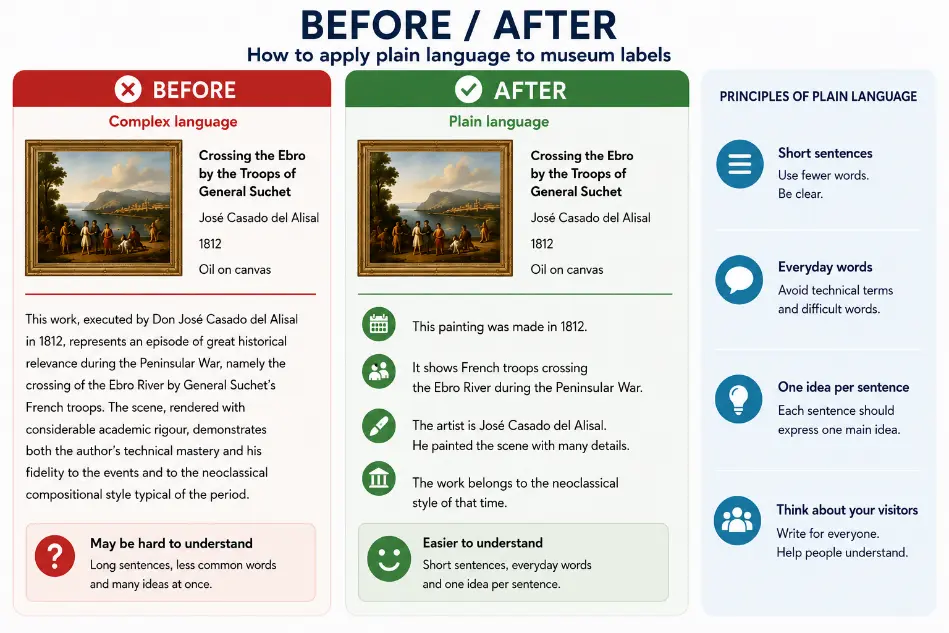
Before and after comparison of an exhibition label for a painting. Before: one long sentence with difficult words. After: three short sentences with everyday words. A side panel lists four plain language principles: short sentences, everyday words, one idea per sentence, and think of your visitors.
Image 1. Before/After: how to apply plain language to an exhibition label


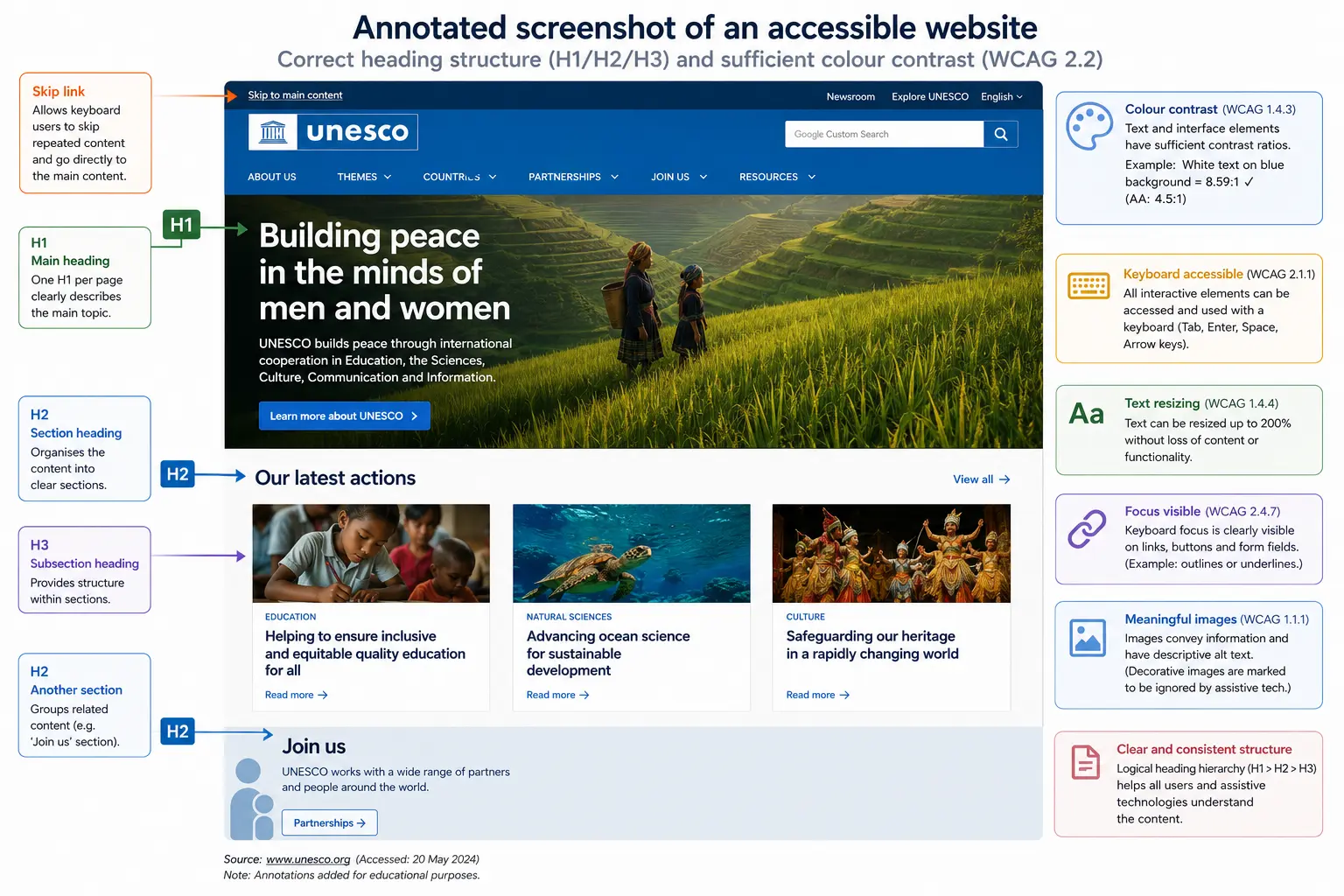
Annotated screenshot of a website homepage. Labels point to a skip link, one main heading (H1), section headings (H2 and H3), sufficient colour contrast, keyboard access, resizable text, a visible focus indicator and meaningful images with descriptive alt text.
Image 2. Annotated example of an accessible website homepage

Infographic 3. Key standards and laws at a glance

Standard / law What it is Who or what it covers
WCAG 2.2 International technical guidelines (W3C) Anyone creating digital content. Not a law by itself, but the base for legal standards.
Web Accessibility Directive (EU) 2016/2102 EU law Websites and mobile apps of public sector bodies. Accessibility statement required. Some exclusions; a disproportionate burden assessment is allowed.
European Accessibility Act (EU) 2019/882 EU law, applies since 28 June 2025 Certain consumer products and services (e.g. e-commerce, e-books, ticketing). Exemptions for microenterprises providing services and for disproportionate burden.
EN 301 549 European technical standard Technical requirements used to show compliance with EU rules. It builds on WCAG.

National laws may add rules. Always check the rules in your own country.

Videos

When we design for disability, we all benefit | Elise Roy | TEDxMidAtlantic

TEDx talk, about 9 minutes. Although focused on design in general, it directly addresses the Universal Design principle behind this module: designing for accessibility benefits everyone, not only people with disabilities. It is a useful argument for cultural managers who are new to accessibility. Captions and a transcript are available on TED.com; turn captions on when you share it.

Examples from the cultural sector

Library website: Since Directive (EU) 2016/2102, public sector bodies in the EU, such as the Biblioteca de Catalunya, must publish an accessibility statement for their website. A good library page has clear headings, a visible search box, text alternatives for images and a contact for reporting accessibility problems.

Theatre and community centre: A theatre’s digital event listing gives date, time, price and place as real text, not only in a poster image. It says if the show has captions, audio description or sign language, and offers an accessible way to book. A community centre’s social media post uses alt text on photos, captions on videos and #CamelCase hashtags.

Shared platform: Europeana brings together heritage content from thousands of libraries, archives and small museums across the EU. It shows how smaller institutions can use shared digital infrastructure, with multilingual descriptions and structured metadata.

Useful links or external resources

W3C Web Accessibility Initiative (WAI): The de facto international technical reference for WCAG; includes practical guidance such as “Making Content Usable” and non-technical introductions to digital accessibility principles.

European Commission – official page on the European Accessibility Act – explains which digital products and services are covered by Directive 2019/882 and the transposition deadlines in each Member State.