Step 4 of 7

4. Learning Content

Explanatory text

Sensory accessibility requires a design approach that takes into account the diverse ways people perceive and experience cultural spaces. It goes beyond eliminating barriers, promoting experiences accessible through different sensory channels, offering information and content in multiple formats (text, audio, images, tactile elements, and, where possible, olfactory stimuli). This means designing clear and legible paths from the outset, using effective signage, developing sensory maps, designating quiet areas, offering tactile aids, audio descriptions, and multisensory materials, as well as providing advance information on the sensory characteristics of the spaces. Consulting people with sensory disabilities and experimenting with diverse audiences allows us to develop simple, sustainable, and truly effective solutions.
Images and/or infographics


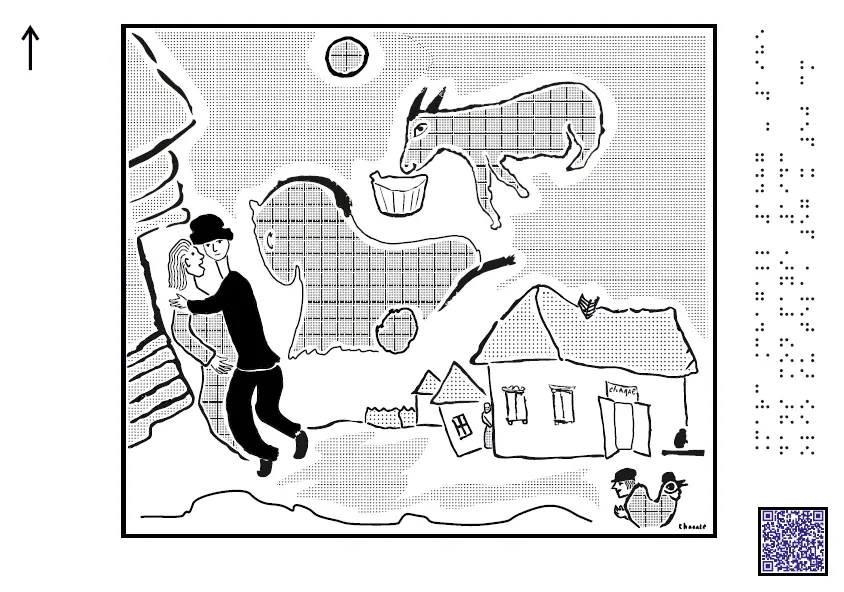
Black-and-white tactile reproduction of a painting, with dotted textures, a Braille title and a QR code.

https://www.gamtorino.it/it/gam-for-all

An example from the Modern Art Gallery (GAM) in Turin (Italy): this is one of the ten tables made accessible for visually impaired people and not only! The work of art of Chagall has been made in relief and each colour/part has a different dot texture; the title of the work of art is in Braille code, next to the picture; on the bottom right a qr code allows to connect to the audio description. Really important is that the audio description explains to the person what is being touched from the top left, to the right and at the bottom.


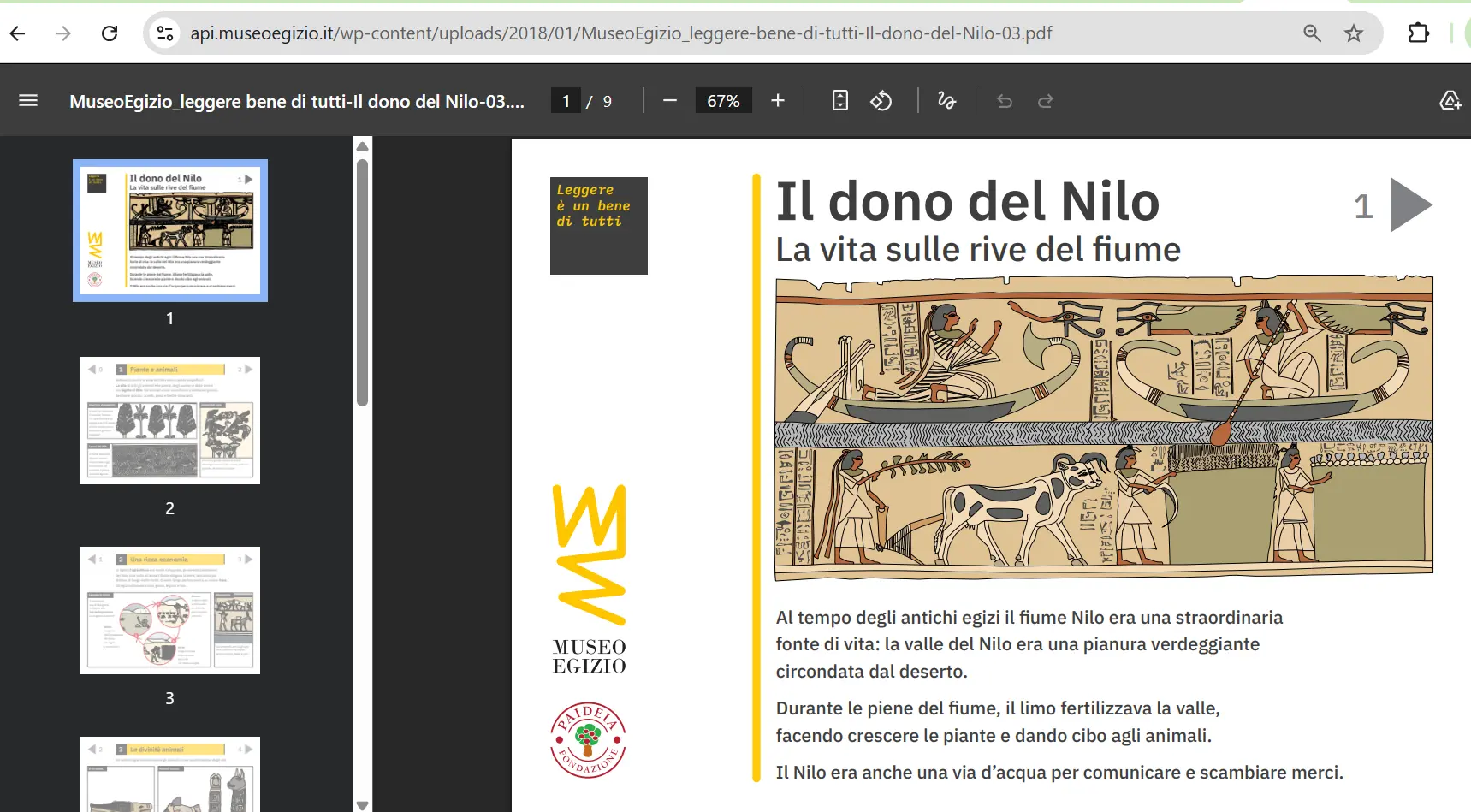
https://api.museoegizio.it/wp-content/uploads/2018/01/MuseoEgizio_leggere-bene-di-tutti-Il-dono-del-Nilo-03.pdf

Thematic documents with simplified content in "Easy To Read", downloadable from the website of the Egyptian Museum based in Turin, https://www.museoegizio.it/info/accessibilita/ .

The image is a screenshot of one of the three available documents about Nile River and life close to riverbanks.

Videos

https://www.youtube.com/watch?v=9aoFdBYePos

The Eurodeputy Ciaran Mullooly states that true inclusion requires a change in thinking: accessibility must become a habit embedded in how we design spaces, services and communities.

Examples from the cultural sector

Germanasca Valley Mining Ecomuseum (ScopriMiniera), based in Prali, Italy.

An “eco-museum” is a museum that tells the story of a local area through its people, traditions, nature, and cultural heritage. It involves the local community and often includes different sites across the territory rather than a single building.

https://www.ecomuseominiere.it/

The Germanasca Valley Mining Ecomuseum is an excellent example of how sensory accessibility can be integrated into a cultural experience. Visitors explore the mine through an immersive journey that naturally engages different senses. Accessibility can be further enhanced with sensory maps, tactile models of the mine, audio descriptions, multisensory guided tours, and clear information about the sensory characteristics of each space, helping visitors choose the experience that best suits their needs.

Useful links or external resources
  1. https://vimeo.com/1088761424?fl=pl&fe=cm

Explanation of the mobile app for visiting the Museum of Oriental Art (MAO) based in Torino. This video has audio, Italian Sign Language interpreter and clear images related to the app functionalities.

  1. https://api.museoegizio.it/wp-content/uploads/2025/04/Storia-sociale-del-Museo-Egizio-EN.pdf

Social story freely downloadable from the website of the Turin Egyptian Museum. It is a simple, visual guide that helps visitors understand what to expect before and during their museum visit. It is especially useful for autistic visitors, people with cognitive disabilities or anxiety, as well as children, families, and anyone who benefits from clear, step-by-step information.