Step 4 of 7

4. Learning Content

Explanatory text

Understanding the Inclusive Visitor Journey

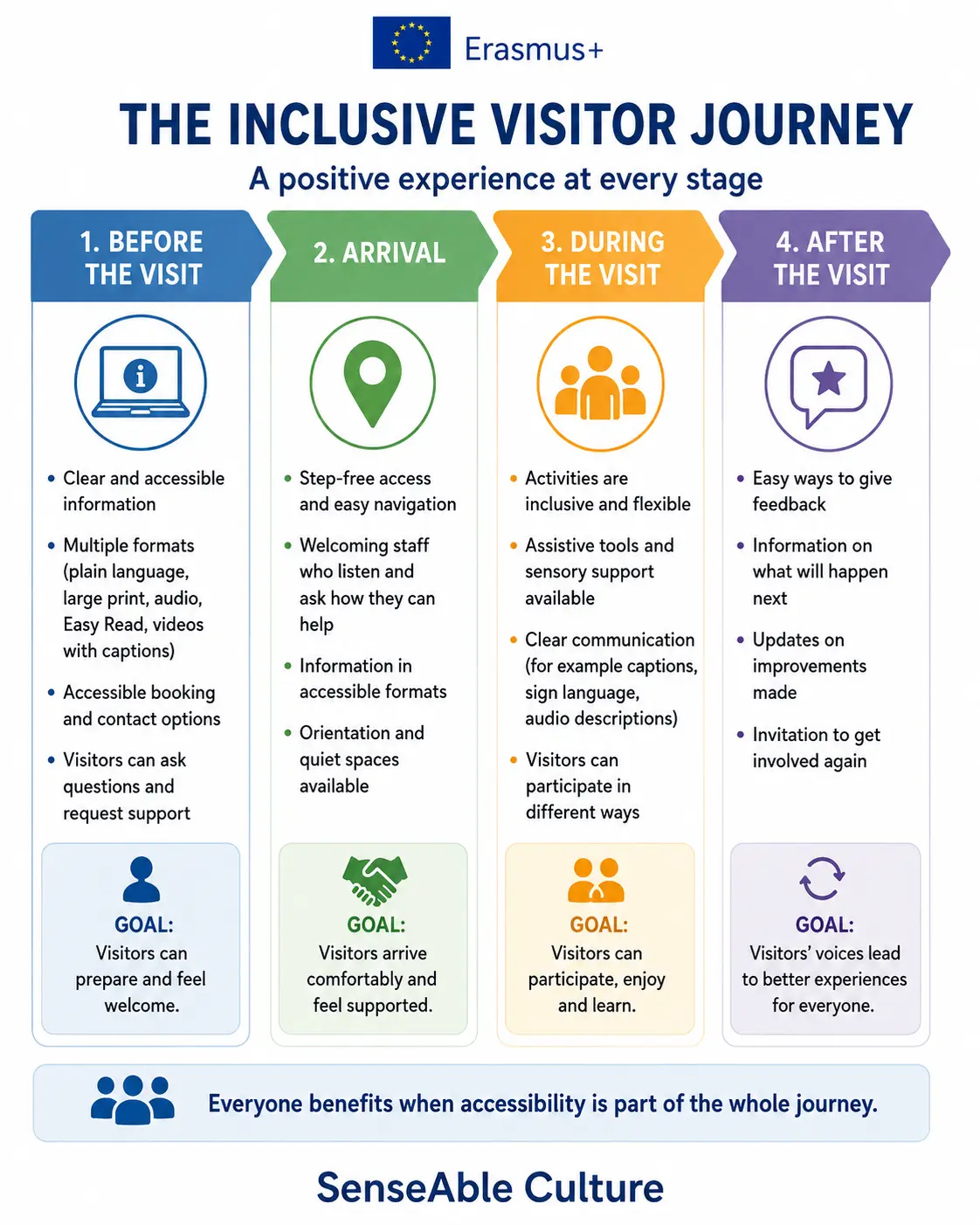
Inclusive visitor services are created by understanding the complete visitor journey: preparation, arrival, participation and follow-up. Cultural institutions should communicate simply and clearly, offer choices, ask visitors what support they prefer rather than making assumptions and, as much as possible, have a responsible person or team for accessibility-related questions.

Co-creation, Feedback and Continuous Improvement

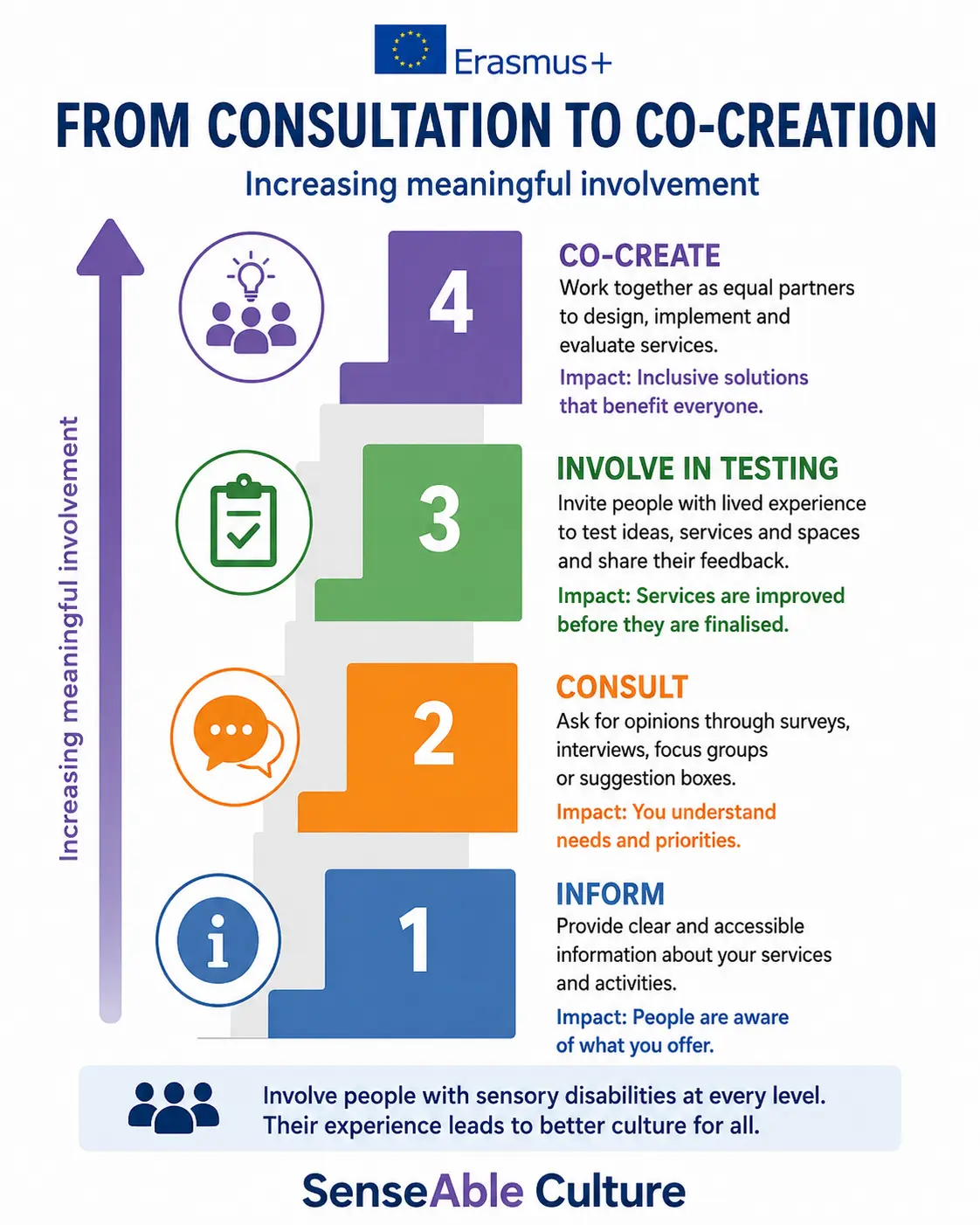
Persons with sensory disabilities should be involved not only as service users, but also as advisers, testers and co-creators, as they can offer realistic input. Accessible surveys, interviews, focus groups, observation and testing visits can help institutions understand and manage barriers. Feedback should lead to visible action through a simple cycle: ask, listen, prioritise, improve and report back.

This approach helps build trust and supports meaningful cultural experiences for everyone.
Images and/or infographics

Four-step infographic showing increasing audience participation from Inform, to Consult, to Involve in Testing, to Co-create, with co-creation as the highest level of meaningful involvement.

Four-stage inclusive visitor journey showing Before the Visit, Arrival, During the Visit and After the Visit, with examples of accessible information, staff support, participation and feedback.

Videos

https://www.ted.com/talks/elise_roy_when_we_design_for_disability_we_all_benefit

Examples from the cultural sector

The Museo Nacional del Prado in Madrid offers a strong example of an inclusive visitor experience. 

Its “Accessible Visit” service includes priority access, induction loops, accessible maps, Easy Read materials, a visual guide for autistic visitors, audio descriptions, sign guides and personalized visitor support. 

The museum also provides accessible feedback and contact channels through its Accessibility Unit, allowing visitors to submit requests, complaints and suggestions. This demonstrates how accessibility can be integrated throughout the visitor journey, from preparation and arrival to participation and follow-up.

Library example: A local library can publish clear accessibility information before events, offer verbal and accessible digital feedback options, and invite users with sensory disabilities to test registration, orientation and event communication.

Community cultural centre example: A cultural centre can involve local disability organisations when planning activities, test the visitor journey before launch, and provide more than one way to request support and give feedback.

Useful links or external resources